Growing a Lifetime of Smiles
Setting the Stage for Your Child’s Health
From the first baby tooth to the "big kid" milestones, we track every step of your child’s development to ensure a healthy, confident future.
At Raya Sunshine, we look at dental development as a roadmap. It isn’t just about making sure teeth are white; it’s about making sure the jaw is growing correctly, the bite is aligned, and your child is developing the habits they need to keep their teeth for life. By monitoring these changes early, we can often simplify—or even avoid—complex dental work down the road.

Growing a Lifetime of Smiles
Setting the Stage for Your Child’s Health
From the first baby tooth to the "big kid" milestones, we track every step of your child’s development to ensure a healthy, confident future.
At Raya Sunshine, we look at dental development as a roadmap. It isn’t just about making sure teeth are white; it’s about making sure the jaw is growing correctly, the bite is aligned, and your child is developing the habits they need to keep their teeth for life. By monitoring these changes early, we can often simplify—or even avoid—complex dental work down the road.
What to expect
What to expect
What to expect
Developmental Milestones
The American Academy of Pediatric Dentistry recommends a first visit by age one. This is a "lap exam" where we check for proper jaw development and discuss milestones.

You can customize the tone depending on the center's branding— whether it’s warm and personal, professional, or clinical.


Age 1
Age 1
Age 1
The "Well-Baby" Visit
The American Academy of Pediatric Dentistry recommends a first visit by age one. This is a "lap exam" where we check for proper jaw development and discuss milestones.

What we look for:
Early signs of decay, gum health, and how the first few teeth are erupting.
Parent Chat:
We'll talk about "bottles at bedtime," pacifier use, and how to clean those tiny new teeth.
Ages 2-5
Ages 2-5
Ages 2-5
The Toddler Years
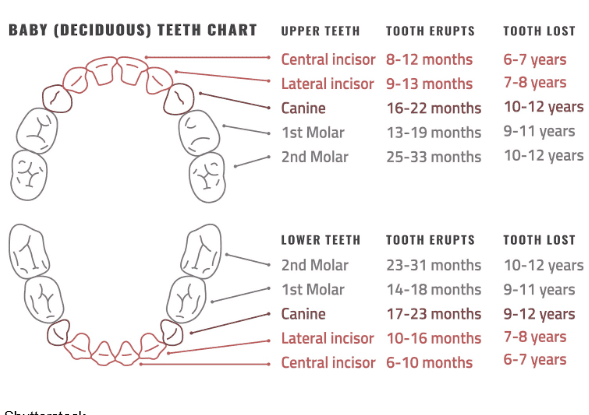
By age three, most children have their full set of 20 baby teeth. These teeth act as "space maintainers" for the adult teeth waiting underneath.

The Focus:
Establishing a routine. This is when we introduce "Tell-Show-Do" to help them feel brave and curious about their check-ups.
Prevention:
We may recommend Fluoride Treatments to strengthen the enamel against the "sugar bugs."
Ages 6-12
Ages 6-12
Ages 6-12
The Transition Years
This is the "mixed dentition" stage, where your child has a mix of baby and adult teeth.

6-Year Molars:
These are permanent teeth that grow in the very back. Because they don't replace a baby tooth, many parents don't realize they are permanent!
Monitoring Growth:
We track the jaw's expansion to see if adult teeth have enough room to erupt straight.
Sealants:
We often apply thin, protective "raincoats" to the deep grooves of permanent molars to seal out bacteria.
How Cavities Actually Form
The Science of "Sugar Bugs"
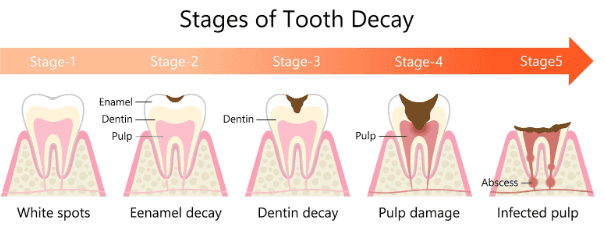
Many parents feel a sense of guilt when they hear their child has a cavity, but it's actually a biological process that we can manage together. A cavity is essentially a soft spot in the tooth's enamel caused by a process called demineralization.
You can customize the tone depending on the center's branding— whether it’s warm and personal, professional, or clinical.

The Bacteria:
We all have naturally occurring bacteria in our mouths. These "sugar bugs" love to hide in the deep grooves of molars and the tight spaces between teeth.

The Bacteria:
We all have naturally occurring bacteria in our mouths. These "sugar bugs" love to hide in the deep grooves of molars and the tight spaces between teeth.

The Bacteria:
We all have naturally occurring bacteria in our mouths. These "sugar bugs" love to hide in the deep grooves of molars and the tight spaces between teeth.

The Fuel:
When your child eats starches or sugars (even "healthy" ones like crackers or fruit juice), the bacteria eat the leftovers and produce acid as a byproduct.

The Fuel:
When your child eats starches or sugars (even "healthy" ones like crackers or fruit juice), the bacteria eat the leftovers and produce acid as a byproduct.

The Fuel:
When your child eats starches or sugars (even "healthy" ones like crackers or fruit juice), the bacteria eat the leftovers and produce acid as a byproduct.

The Time:
That acid sits on the enamel and slowly dissolves the minerals that make teeth hard. Over time, a tiny hole forms—this is a cavity.

The Time:
That acid sits on the enamel and slowly dissolves the minerals that make teeth hard. Over time, a tiny hole forms—this is a cavity.

The Time:
That acid sits on the enamel and slowly dissolves the minerals that make teeth hard. Over time, a tiny hole forms—this is a cavity.


Dr. Raya's Pro-Tip:
Dr. Raya's Pro-Tip:
Dr. Raya's Pro-Tip:
"Sticky" is often trickier than "Sweet." While chocolate melts away quickly, starchy snacks like goldfish crackers or dried fruit leathers get stuck in the grooves of teeth for hours, giving acid more time to do damage.


Dr. Raya's Guide to Healthy Habits
We aren't just looking at teeth; we're looking at your child's growth, nutrition, and confidence.
As a Board-Certified Pediatric Dentist, Dr. Raya has spent years studying the specific way children's mouths grow. From the way a thumb-sucking habit affects the roof of the mouth to how a baby tooth's health dictates the health of the adult tooth underneath, she looks at the big picture.
You can customize the tone depending on the center's branding— whether it’s warm and personal, professional, or clinical.
As a Board-Certified Pediatric Dentist, Dr. Raya has spent years studying the specific way children's mouths grow. From the way a thumb-sucking habit affects the roof of the mouth to how a baby tooth's health dictates the health of the adult tooth underneath, she looks at the big picture.

The "Rice Grain" Rule
For children under three, use a tiny smear of fluoride toothpaste the size of a grain of rice. Once they can reliably spit (usually around age three), move up to a pea-sized amount.

The "Rice Grain" Rule
For children under three, use a tiny smear of fluoride toothpaste the size of a grain of rice. Once they can reliably spit (usually around age three), move up to a pea-sized amount.

The "Rice Grain" Rule
For children under three, use a tiny smear of fluoride toothpaste the size of a grain of rice. Once they can reliably spit (usually around age three), move up to a pea-sized amount.

The Nighttime "Danger Zone"
Our mouths produce less saliva while we sleep. Saliva is our natural "wash cycle" that neutralizes acid. This makes the brushing session right before bed the most important one of the entire day!

The Nighttime "Danger Zone"
Our mouths produce less saliva while we sleep. Saliva is our natural "wash cycle" that neutralizes acid. This makes the brushing session right before bed the most important one of the entire day!

The Nighttime "Danger Zone"
Our mouths produce less saliva while we sleep. Saliva is our natural "wash cycle" that neutralizes acid. This makes the brushing session right before bed the most important one of the entire day!

Water is Your Secret Weapon
If you're on the go and can't brush after a snack, have your child swish with plain water. It helps rinse away food particles and neutralizes the acid until you can get to a toothbrush.

Water is Your Secret Weapon
If you're on the go and can't brush after a snack, have your child swish with plain water. It helps rinse away food particles and neutralizes the acid until you can get to a toothbrush.

Water is Your Secret Weapon
If you're on the go and can't brush after a snack, have your child swish with plain water. It helps rinse away food particles and neutralizes the acid until you can get to a toothbrush.

Expert care, compassionate approach


Expert care, compassionate approach


Expert care, compassionate approach


At Raya Sunshine Pediatric Dentistry, we’re committed to providing your kiddo with a truly child-friendly, patient-centered experience.
Open hours
Mon - Closed
Tue - Closed
Wed - 8AM - 4:30 PM
Thu - 8AM - 4:30 PM
Fri - 8AM - 4:30 PM
Saturday- By Appointment Only
® Raya Sunshine Pediatric Dentistry. All rights reserved |

At Raya Sunshine Pediatric Dentistry, we’re committed to providing your kiddo with a truly child-friendly, patient-centered experience.
Open hours
Mon - Closed
Tue - Closed
Wed - 8AM - 4:30 PM
Thu - 8AM - 4:30 PM
Fri - 8AM - 4:30 PM
Saturday- By Appointment Only
® Raya Sunshine Pediatric Dentistry. All rights reserved